 Login
Login
 Please specify the quantity of product(s).

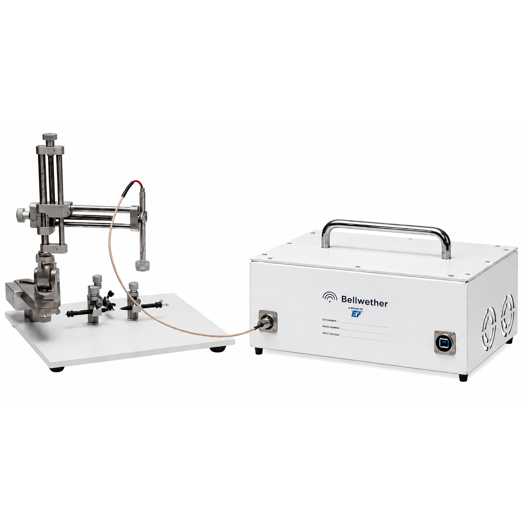
NanoTone Focused Ultrasound Drive System
Precision Focused Ultrasound for Preclinical Neuroscience
Built with a singular facus - Removing the constraints that have held preclinical ultrasound research back from decades.
Stereotaxic-precision harware and planning software in one integrated unit. Set parameters, simulate focal points, and run your experiments from a single interace.
Request your demo today. Call or email Stoelting to get started.
| Item | Product | Price | QTY |
|---|---|---|---|
| 50511 | NanoTone 2.0 Bundle (Drive + 2 standard transducers) | Login | |
| 50512 | NanoTone Transducer, 0.5 MHz | Login | |
| 50513 | NanoTone Transducer, 1.0 MHz | Login | |
| 50514 | NanoTone Transducer, 1.5 MHz | Login | |
| 50515 | NanoTone Transducer, 3.0 MHz | Login | |
| 50516 | NanoTone Transducer, Custom (0.2-10 MHz) | Login | |
| 50517 | Cell Culture Adapter | Login | |
| 50519 | Stereotactic Adapter Kit | Login |
 Add to Cart
The NanoTone 2.0 Drive System brings focused ultrasound (FUS) research capability to labs studying brain circuits, behavior, and disease mechanisms — now available through Stoelting.
Focused ultrasound uses acoustic energy to non-invasively modulate or ablate targeted brain tissue, giving researchers a way to study or influence neural circuits without the confounds of implanted electrodes or the variability of systemic drug delivery.
Why Researchers Are Adopting FUS
Conventional approaches to targeted brain manipulation carry real limitations:
- Anesthesia confounds — many manipulation techniques require anesthesia that alters the very circuits under study
- Targeting precision — surgical or pharmacological approaches often lack the spatial resolution needed for circuit-level questions
- Throughput — traditional stereotaxic procedures are slow, limiting screening and cohort size
- Parameter flexibility — few systems allow researchers to easily vary acoustic parameters across studies
The NanoTone 2.0 platform is built to address these constraints directly, enabling precise, reproducible, publication-ready results in awake, behaving subjects.
Platform Overview
NanoTone 2.0 is a modular drive system built around interchangeable application-specific adapters, allowing one core unit to support a range of experimental designs — from freely-moving behavioral studies to in vitro applications.
Adapter compatibility, focal precision specs, and full technical documentation available on request — contact Stoelting for the current spec sheet and configuration options.
Who should be using NanoTone
- Academic neuroscience labs — studying circuit function, behavioral phenotypes, and disease models
- Pharmaceutical research teams — screening CNS targets and validating mechanisms of action
- Veterinary and translational research settings — working across species